
If you’re seeking depigmentation cream for the face, this guide highlights five clinically oriented options that target dark spots, melasma, and uneven skin tone. These products are best for individuals dealing with sun spots, age spots, hyperpigmentation, or vitiligo-related uneven tone. Each entry explains who it’s best for, why it’s chosen, and a practical caveat to consider before purchase. The overview below helps compare active ingredients, intended results, and skin-safety profiles to support an informed choice.
Overview of chosen products
| Product | Key Benefit | Best For |
|---|---|---|
| Dermisa Skin Fade Cream with Vitamin C | Brightening with Vitamin C and Licorice for even tone | People seeking a brightening daily cream for sun spots and age spots |
| Vitiligo Cream by BERVEAL | Fade white spots and even pigmentation | Those dealing with vitiligo-related discoloration |
| Melasma Treatment by Pharmlitalia | Targets melasma and post-blemish marks | Users with stubborn patches and uneven skin tone |
| Roseblem Arbutin 7% + Tranexamic Acid 4% | Arbutin and tranexamic acid action for dark spots | Users needing strong pigment control with hydration |
| ARCNOVOLAB Vitiligo Skin Support Cream | Advanced pigment formula for balanced complexion | Those seeking targeted support for uneven patches |
Dermisa Skin Fade Cream With Vitamin C

Dermisa Skin Fade Cream combines Vitamin C and Licorice Extract to visibly reduce dark spots, age spots, and uneven tone while improving skin radiance. It is formulated without parabens or sulfates and is cruelty-free, making it a clean option for sensitive or all-skin-type users. This product is best for individuals seeking a brightening daily cream that also moisturizes the face without heavy residue.
- Best for: daily brightening and evening skin tone with accessible, clean ingredients.
- Why selected: proven brightening actives and a gentle, fragrance-free profile that supports general skin clarity.
- Caution: results vary; those with very sensitive skin may need a patch test first due to active brighteners.
Vitiligo Cream, BERVEAL

This natural, herbal-vitiligo cream claims to fade white spots and improve overall skin pigmentation to restore a more even complexion. It is positioned for users seeking a gentler, plant-based option for vitiligo-related discoloration and tone balance. It is best for individuals who want a naturally derived formula with emphasis on skin harmony.
- Best for: vitiligo-affected skin seeking gradual fading of white patches.
- Why selected: addresses pigmentation differences with a natural herbal approach.
- Caution: efficacy can be gradual; consistency is key to see improvements.
Melasma Treatment for Face by Pharmlitalia

This melasma-focused cream targets stubborn patches across the face and body, aiming to even tone and reduce post-blemish marks. It combines guidance on gradual brightening with dark spot reduction for a more uniform complexion. It’s best for individuals dealing with persistent melasma and post-inflammatory hyperpigmentation who want a dedicated treatment approach.
- Best for: targeted melasma and post-blemish discoloration.
- Why selected: clearly aimed at stubborn patches and uneven texture.
- Caution: sensitive skin users should introduce gradually to monitor irritation.
Roseblem Arbutin 7% + Tranexamic Acid 4%
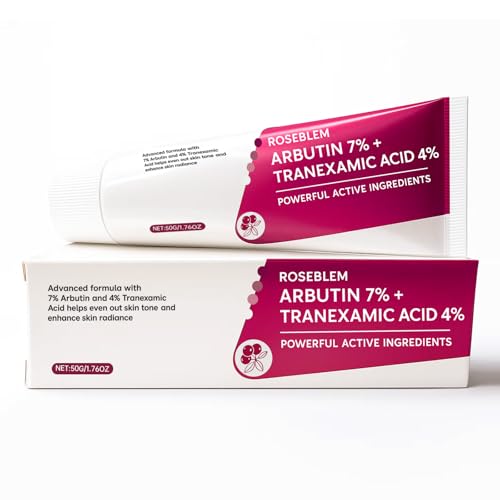
This formula pairs 7% Arbutin with 4% Tranexamic Acid to reduce dark spots and even skin tone. The combination is designed to regulate melanin production and provide deep hydration for a comfortable, non-greasy finish. It’s best for individuals who want a strong, dual-action approach to pigmentation with hydrating support.
- Best for: reducing dark spots and evening complexion with hydrating benefits.
- Why selected: robust pigment-control ingredients with skin-friendly hydration.
- Caution: tranexamic acid may cause irritation for very sensitive skin; patch testing is advised.
ARCNOVOLAB Vitiligo Skin Support Cream

ARCNOVOLAB’s Vitiligo Skin Support Cream focuses on a balanced complexion through an advanced pigment formula. It is designed to minimize the contrast between uneven patches and natural skin tone, offering a harmonious look with regular use. This option is best for individuals seeking targeted pigment balancing as part of a broader skincare routine.
- Best for: patchy pigmentation seeking a balanced, uniform look.
- Why selected: dedicated pigment-supporting formula for uneven areas.
- Caution: results depend on consistent application and individual skin response.
Buying Guide: Depigmentation Cream For Face
What should I look for in a depigmentation cream?
Key factors include active ingredients (vitamin C, licorice extract, arbutin, tranexamic acid), skin type compatibility, and sensitivity considerations. Look for products labeled for hyperpigmentation, melasma, or vitiligo-related discoloration. Avoid formulations with harsh sulfates or parabens if you have sensitive skin.
How do I choose based on my skin concern?
- Dark spots and uneven tone: consider brightening and spot-reducing formulations with vitamin C or licorice.
- Melasma or patches: choose products marketed for melasma with gradual lightening properties.
- Vitiligo-related whitening patches: select products specifically designed for vitiligo or pigment balancing with cautious expectations.
What about safety and application?
- Patch test new products for 24–48 hours to check for irritation or an allergic reaction.
- Introduce new depigmentation products gradually, especially if you have sensitive or reactive skin.
- Follow usage directions consistently, and avoid sun exposure without sunscreen when using brightening agents.
How should I compare products?
Focus on active ingredients, target concerns, and potential side effects. Compare the strength of pigment-control agents, hydration properties, and whether the formula is tailored for a specific condition (melasma, vitiligo, or general hyperpigmentation).
FAQ
- Q: Can a depigmentation cream remove vitiligo patches completely?
A: Most depigmentation creams aim to even tone and reduce contrast. Complete removal of vitiligo patches is unlikely; results vary by individual and patch location. - Q: How long does it take to see results?
A: Visible changes typically require several weeks to months of consistent use, depending on the product and skin condition. - Q: Should I use sunscreen with depigmentation products?
A: Yes. Sunscreen helps prevent further pigmentation and supports results by protecting treated areas from sun exposure. - Q: Can I use multiple depigmentation products at once?
A: It’s generally best to consult a dermatologist before layering depigmentation products to avoid irritation or unwanted interactions. - Q: What if I experience irritation?
A: Discontinue use and consult a skincare professional if irritation or redness persists beyond a patch test window. - Q: Are natural or herbal options safer?
A: Natural does not always mean safer for all skin types. Choose products with clearly labeled ingredients and test them on a small skin area first.